
Work through the hiring decision from the first description and site visit to a written agreement, inspection record and handover.
Put the decision on one page
Start with the result you would pay for, the exact property address and the first date the household needs the result. A note as simple as “replace the uneven front walk from the driveway to the porch and keep a safe entrance available for my mother” contains both an installation request and an access requirement. If the second sentence never reaches the bidder, the technically correct proposal might still be wrong for your household.
Set two limits while the project is small enough to describe clearly. First, name anything that has to remain: an existing step, a matching front door, a particular tree or a route between buildings. Second, identify a decision you have not made. Maybe you would keep the current layout but need prices for two finishes. Maybe the cause of a stain is unknown. In both cases, a contractor can tailor the first visit if you identify the uncertainty before requesting a final total.
Browse the contractors serving Michiana for business locations and contact details.
Shortlist the people whose daily work matches the task
A split-level addition, a sticking door and a failing driveway call for different conversations. For an addition, ask who will coordinate design, trades and inspections. For a door that rubs, start with photos of the door, frame and floor. For a driveway, describe the pavement to be removed and where the new surface meets the garage or street.
Michiana Online lists New Horizon Builders in Middlebury for home building and additions, Integrity Home Transformation in Goshen for handyman work, and Marc Todd Concrete in Sturgis for concrete projects. Use those specialties to narrow the businesses you contact. Ask each one whether it handles your type of project at your address and who would supervise the work.
Compare recent work of the same kind. A photo of a handsome kitchen does little to show how someone handled an addition joining an older house. A business that cleans siding can explain a washing approach, while a company assessing indoor moisture has a different assignment. Call enough candidates to obtain meaningful comparisons, but avoid booking several estimates for different tasks under the same description. First establish that each firm understands the property and wants to undertake the work.
For a suspected moisture issue, decide whether you need an inspection first. BreatheEasy Mold Solutions in Shipshewana is listed for inspection and remediation. Ask what information an initial visit provides and how that result would inform any separate quote. A person who can explain the limits of the first visit is giving you something concrete to assess. A broad promise that the property will be “as good as new” gives you no way to judge what will actually be delivered.
Check qualifications with the authority responsible for the address
The contracting business may work on both sides of the Indiana–Michigan line. Tell the person preparing the estimate which state, county and municipality the property is in. Ask for the company name that will appear on the agreement, the name of the individual responsible for the work and any license or registration numbers relevant to that work. Distinguish the business issuing the invoice from a subcontractor performing a regulated trade. The numbers on a truck are a starting point for a check.
For an Indiana project, verify which city or county building office serves the particular property and what the trade requires there. Inside Mishawaka, the city has its own building department. For a Granger property in unincorporated St. Joseph County, the joint South Bend and St. Joseph County department is a starting point. For a Michigan project, the Department of Licensing and Regulatory Affairs provides license lookup by profession. Its jurisdiction information identifies the enforcing office for particular types of work at a location. Ask the office to explain uncertain cases.
Ask the contractor for evidence of current liability insurance and, when applicable, workers’ compensation or documentation appropriate to its situation. If a certificate leaves a question about who is covered or the dates involved, ask the issuing agent how to verify it. Record what you checked, with whom and on which date. Insurance, trade registration and a permit for the project are separate items. Check each applicable item instead of assuming that one document answers all three questions.
Use the site visit to test a real part of the job
Write down which details the builder can price from the visit and which require more information. A driveway extension, utility connection or change in grade might all affect the budget separately from the house itself. Ask who will confirm each one and when the figure will enter the estimate. End with your three must-haves in order. That gives the builder a clear basis for adjusting the design if the first estimate comes back above budget.
For a front walk, let the contractor see you perform an ordinary task. Walk from the likely parking space to the entrance with a grocery bag or a folded stroller, using the route you normally take. Identify the corner where the task becomes awkward and the feature you want preserved. Ask how the proposed layout addresses both. For a concrete replacement, a conversation with a specialist such as Marc Todd Concrete in Sturgis can start with that junction before it moves on to surface pattern or color.
Photograph the connection to the driveway, any steps and the threshold from the side. Include nearby downspouts and the edges of planting beds. After rain, note where water sits or crosses the route. This gives the installer evidence to investigate without expecting the homeowner to design the slope or determine finished elevations.
Ask each candidate to name something that still needs checking after the visit. A site with an underground system might need a previous layout record. A roof with a history of repairs may need identification before a proposed application is evaluated. Take a note each time someone says they need another piece of information. Those are action items with an owner. They should not silently disappear into an optimistic description of the finished job.
Compare the inclusions that matter to this particular property
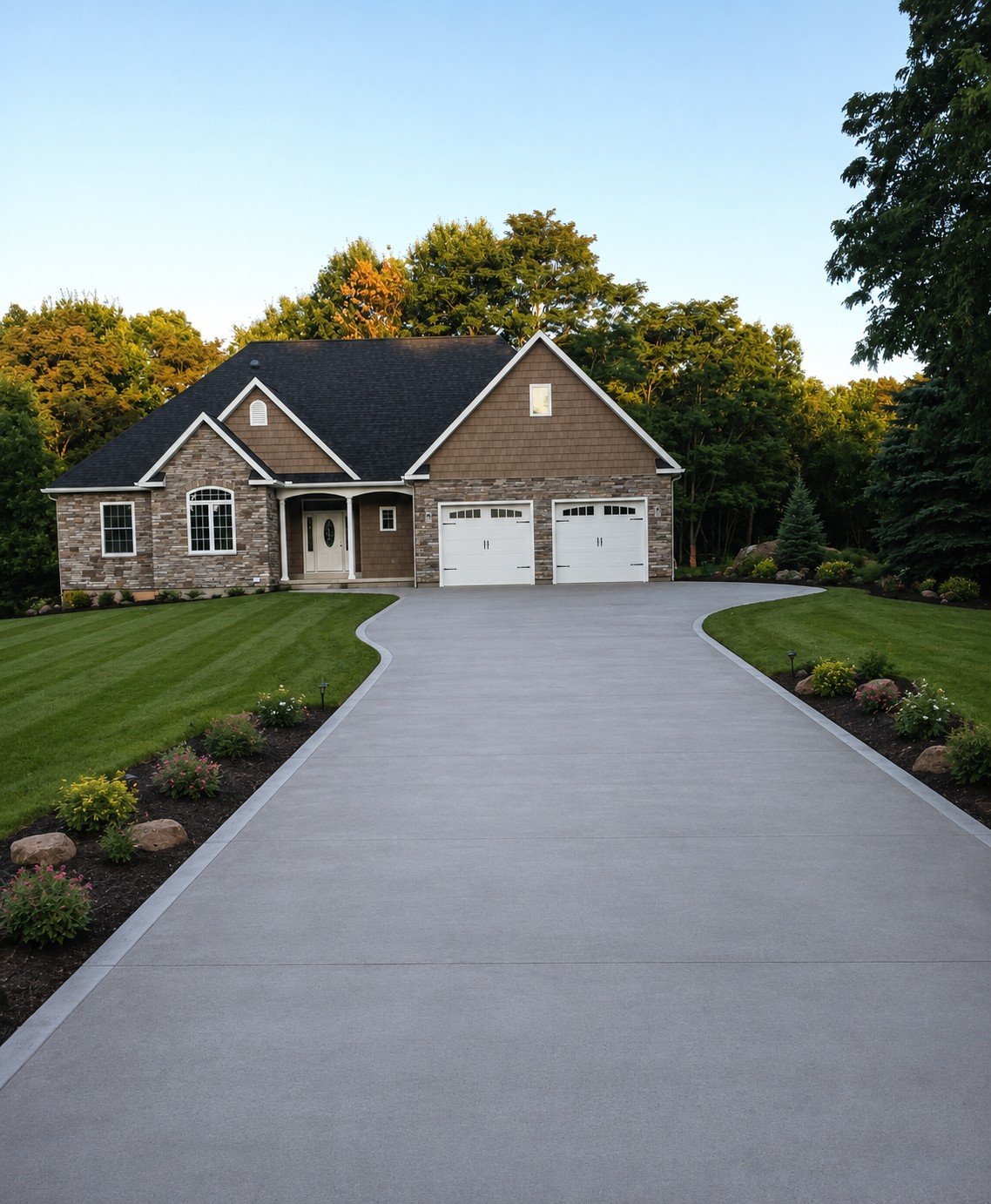
Send two or three contractors the same short description, photos and deadline. Take a driveway replacement as an example. Specify which driveway sections and apron you want priced, whether demolition and haul-away belong in the price, what finish you want and when you need access to the garage. Ask each bidder to explain preparation, drainage, cleanup and any area left out. Leave technical specifications to the people assessing the site.
Put the estimates side by side. For each one, record the base price, materials included, allowances, permit responsibility, disposal, expected start and duration, and cleanup. If one bidder includes removal and another leaves it blank, ask for clarification in writing. A blank is an unanswered question. Ask what finding would change the price and how you would approve the added work.
For an exterior cleaning project with Miller Soft Wash in New Paris, identify which elevations, entries and paved surfaces belong in the quote. If one bid also includes a porch slab and another stops at the siding, separating the slab clarifies what you are buying. If a shingle treatment from Miller’s Roof Rejuvenation is a separate option, keep its product, eligibility and manufacturer guidance with that proposal. Active leaks belong with a roofing assessment first.
For a septic service discussion with Raber Dirtworx in Millersburg, the comparable unit might be a specific pumping visit, a documented inspection or an installation scope. A total for one cannot be treated as a price for the others. Record the service requested, what the provider will report and whether the visit assumes a known access location. For a Goshen handyman repair, specify which side of a door or piece of trim needs work and whether touch-up is included.
Decide whether the people and the proposal fit
Get the legal business name, a phone number, the name of the person supervising the work and any applicable registration or license numbers. Match those details to the issuing office’s records. Ask for evidence of current liability coverage and, where applicable, workers’ compensation coverage. Ask who will perform specialty work and how that trade’s credentials can be confirmed.
Request a reference from a project similar to yours. A homeowner who had a detached garage built can tell you more about a garage contractor than someone who hired the same company for a small repair. Ask what changed between the estimate and final bill, how the crew handled an unexpected problem and whether the homeowner could reach someone after the job.
During a reference call, ask about a moment when the work changed. A former customer might describe a delayed material, a surface discovered beneath the old flooring or a question about access. What matters is whether the customer knew what was changing before work proceeded and whether the written record matched the conversation. Obtain permission before visiting a completed project. A person who has offered to serve as a reference has not necessarily agreed to show strangers around a property.
Choose only after you can explain the deciding factors in your own words. You might prefer the bidder who explicitly includes two days of temporary access arrangements even if its total is higher. Another homeowner might prefer a lower base price because a family member has already agreed to handle the separate cleanup. The right comparison belongs to the household and the actual work. Retain the final version of each bid so your reason for the choice remains clear when the project starts.
Put changes and responsibilities in the agreement
A workable change process has three parts. Somebody describes what changed, somebody gives its effect on cost and timing, and the authorized person accepts or declines it in writing. If a discovery must be made before it can be priced, agree how the investigation will be handled and what decision will follow. Clarify who can authorize a change if you are traveling. The neighbor who can open the gate is rarely the person who should approve an additional charge.
For example, a repair crew may discover that the matching trim is no longer available. You might choose to repair the existing piece, use a similar profile in a less visible location or replace a complete short run so the visible section is consistent. Ask for the cost and appearance implications of each viable option. Save a photo of the selected profile and the written change with the original quote. The installer should be able to identify the agreed piece from those records without relying on a memory of the store display.
Record the allowance, the model or finish you chose, the approved adjustment and the date the builder needs a final answer. For a Middlebury project, identify who will order the items and who will check a delivery against the selection sheet. A sale price means little if the proper quantity or finish cannot arrive in time. Keep each signed change with the same version of the estimate so you can see what the current total includes.
Keep payments and observations tied to completed stages
Get the payment milestones in writing and keep the receipts. Both the Indiana Attorney General and Michigan’s homeowner guidance advise against paying for the whole job in advance. Set aside the correct version of the agreement so an invoice can be matched to actual progress.
At each milestone, walk the area that the payment covers if access is safe and the contractor agrees. Compare what is in place with the description, drawings and selections. Ask about anything obscured by the next trade. If an inspection is required before work continues, record who requests it and where the result will be stored. A photograph taken by the crew while an area is open can help a homeowner remember the layout, but it does not substitute for an applicable inspection or its record.
An interim visit is also a chance to protect ordinary household use. Check whether a promised path still lets someone carry groceries through the door, whether the crew needs access to another room tomorrow and whether a parked trailer will block a waste pickup. Solve practical issues while a change is simple. A daily instruction such as keeping the east gate clear on Wednesday can prevent a second trip with equipment. Put that instruction in the channel the site supervisor actually reads.
Close the file with a working result and a clear contact
Before the final walkthrough, group any remaining concerns by location. “Guest-room door catches near the handle” can be checked. “Trim still needs work” leaves the crew guessing. For a job spread over several visits, take the agreed scope and the approved changes with you. Mark what is complete, what still needs attention and who will contact you next. Where a product must cure or a surface must dry before you can test it, agree on the later check and its date.
Give the household a short handover sheet. It should identify who to contact about workmanship, who handles a product warranty, what care instructions apply and which items remain under observation. Put receipts, permit and inspection records, relevant product labels and the last approved drawings in the property file. If a paid invoice includes several areas, note which one it covers so a later repair does not require reconstructing the whole project from old messages.
A final test for a good hire is whether another person could take over the property file tomorrow and understand the job. They should be able to identify the company that performed it, the work that was approved, the point where another professional took over, and how a future question reaches the right person. That standard works for a large addition and a small repair alike. It protects the time and care that went into choosing the contractor in the first place.
Three points to take with you
Choose contractors who handle your work and can serve the exact property address.
Check the responsible individual and company against the applicable trade records before hiring.
Review the installed work, outstanding corrections and warranty contact together at the final walkthrough.
Contractors businesses listed on Michiana Online
Shipshewana, Indiana
BreatheEasy Mold Solutions provides mold remediation, inspections and testing in Shipshewana, Indiana.
Scott, Indiana
Hershberger Construction builds post-frame pole barns, installs metal roofing and pours concrete driveways, slabs and approaches.
Integrity Home Transformation LLC
Goshen, Indiana
Integrity Home Transformation LLC provides handyman services from Goshen, Indiana, with work in Elkhart, Granger, Mishawaka and South Bend.
Sturgis, Michigan
Marc Todd Concrete is a second-generation concrete contractor in Sturgis, Michigan.
New Paris, Indiana
Miller Soft Wash provides pressure washing and soft washing from New Paris, Indiana.
New Paris, Indiana
Miller’s Roof Rejuvenation is a Fresh Roof-certified provider based in New Paris, Indiana, serving Goshen and nearby Michiana communities.
Middlebury, Indiana
New Horizon Builders, Inc. is a home builder and general contractor in Middlebury, Indiana.
Goshen, Indiana
Dave Anderson provides owner-operated residential plumbing service in Goshen, Elkhart and surrounding northern Indiana communities.
Millersburg, Indiana
Raber Dirtworx provides septic pumping, inspections, repairs and new septic system installations from Millersburg, Indiana.